Bakiriang Maleo Sanctuary: Seeing Sulawesi's Maleo Bird at a Volcanic Nesting Beach
The maleo buries its huge egg in sand warmed by a volcanic vent. At Bakiriang, near Luwuk, a community hatchery has stopped the decline.
Satwa liar7 menit baca
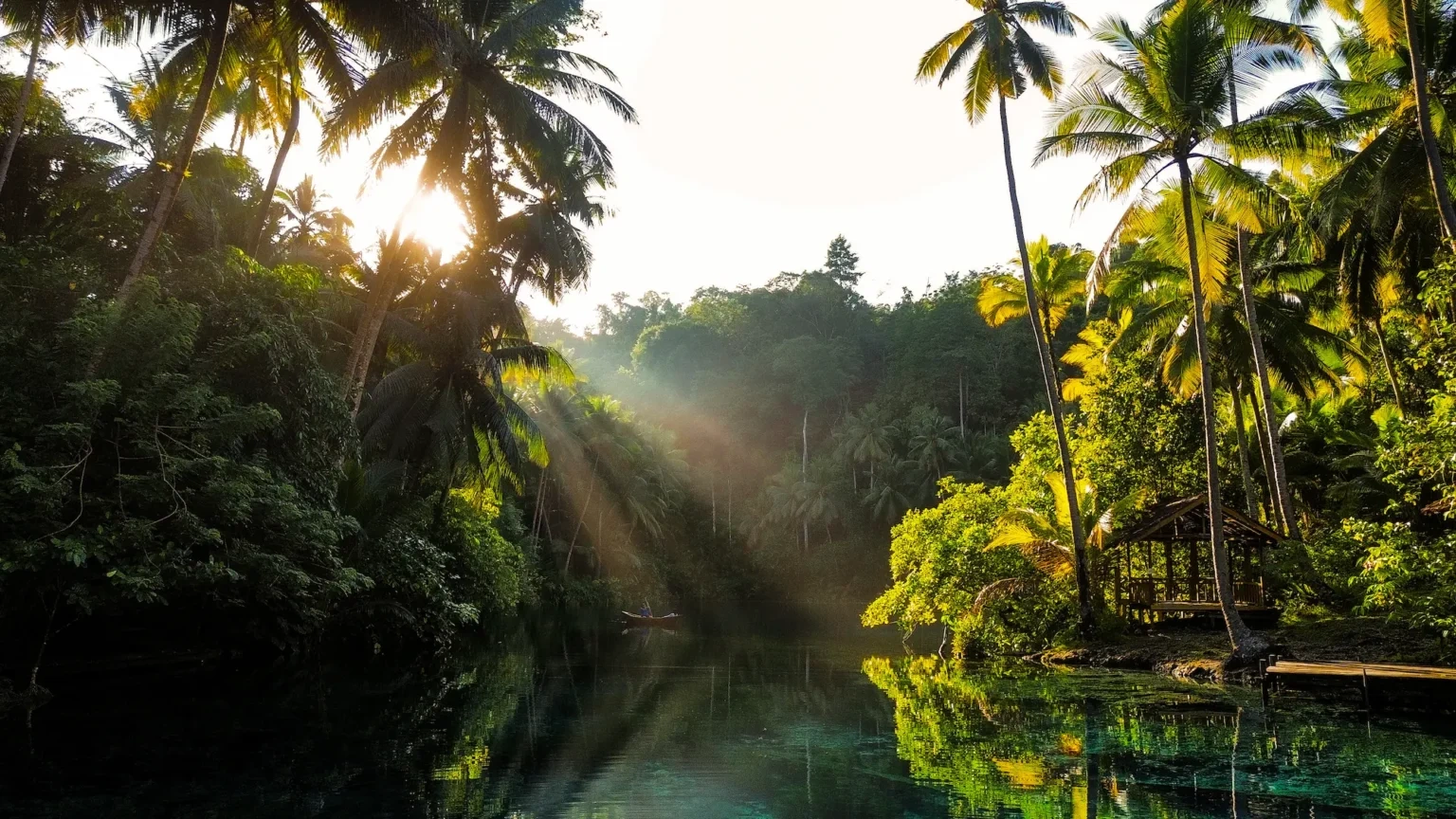
For wild maleo birds, your best chance is Bakiriang, in Banggai regency on the eastern arm of Sulawesi. The drive from Luwuk, to the northwest, takes about three hours. Come in April to June or October to December, start from Luwuk at 04:00 and carry binoculars. The sanctuary protects a beach where the ground stays warm from below, and the maleo needs that heat to hatch its eggs.
Meet the maleo
The maleo (Macrocephalon maleo) lives only on Sulawesi. It is a ground bird about the size of a turkey. It has a bony casque on its head, a dark grey back and a pink, salmon-coloured belly. Its body looks put together from mismatched parts.
The breeding habits are stranger still:
- The female lays one egg, about as big as a grapefruit. A hen's egg would fit inside it about five times over.
- She buries it around 50 cm down in warm sand or volcanic soil.
- Then she leaves. Neither parent ever returns.
- The chick hatches alone and takes about two days to dig up to the surface.
- A few hours later, it can fly.
For about 100 years, the number of maleos has fallen. People dug up the eggs and cleared the forest. Fewer than 14,000 mature birds remain, and the species is listed as Critically Endangered. Bakiriang is one of the few places where, at the time of writing in 2026, the numbers are going up. Visitors are welcome.
Why maleos nest at Bakiriang
The nesting ground is a beach of soft black sand on the Banggai coast. Females have laid here for as long as records exist, and almost certainly for centuries before. Under the sand, a low-temperature geothermal vent keeps the soil at about 33°C. A maleo egg needs that warmth to develop. The vent does the work a nesting parent would do elsewhere.
How the hatchery protects the eggs
The hatchery is a fenced area over the nesting beach.
- Fence: keeps out monitor lizards and feral pigs.
- Night patrols: rangers walk the beach every night in the laying season.
- Relocation: rangers move eggs in danger to a managed incubation area inside the fence. The chicks go free after hatching.
In 2025, the hatchery released 412 chicks. No earlier year comes close.
Planning your visit
Who runs it: a community foundation from the area, jointly with BBKSDA Sulawesi Tengah.
Booking: There is no online booking. Contact the Luwuk tourism office one or two days ahead.
Costs at the time of writing (2026): €3.50 entry per person, and €10 for a local guide for the morning.
Getting there: The road from Luwuk takes three hours each way. It is paved at first, then rough. Leave Luwuk at 04:00 to arrive for the busiest nesting hours, 06:00 to 09:00.
What you can and cannot do
Visitors may not set foot on the nesting beach. You watch from a low wooden platform about 30 metres back, looking over the dunes to the fenced sand. The birds are shy. The photos you know were shot with long lenses, so pack binoculars.
You can:
- walk the trail around the outside of the fence
- look inside the shed where the moved eggs incubate
- join a chick release, if one is planned that morning
In the peak season, rangers release chicks on most mornings, and visitors may watch.
Best months
Maleos lay at Bakiriang in every month. Two peaks stand out: April to June and October to December. In those months you have a fair chance of seeing an adult bird on the beach. At other times you see the hatchery at work, and maybe a release, but probably no laying adults.
Stay away in February, at the height of the rains. The river crossings on the Luwuk road flood, and you can lose the morning stuck on the way.
Two other maleo sites in Sulawesi
Tambun, inside Bogani Nani Wartabone National Park. A smaller hatchery run on the same model, with fewer facilities for visitors. It pairs well with a trip to Tangkoko.
Pakuli, Central Sulawesi, on the western edge of Lore Lindu. Of the three sites, this one is hardest to reach. It lies inland, away from the sea, and fewer birds nest there. Combine it with the megalith treks of the Bada Valley if you are already deep in Lore Lindu.
For your first maleo trip, choose Bakiriang. It has the best viewing set-up and the largest population, and its chick releases follow a schedule you can plan around.
Why the project works
People from the nearby villages own and run Bakiriang. Local staff run the foundation. Men who once bought and collected the eggs now work as rangers. In Toili, the primary school teaches a course built around the maleo.
Ask the rangers to show you the records. Chick releases rose from 138 in 2010 to 254 in 2018 and 412 in 2025. The breeding adult count matters even more. Since 2019 it has held at about 45 birds on the beach. The decline here has stopped.
Giving something back
The government funds the hatchery itself. The foundation takes visitor donations in person and spends them on the school programme. A gift of €5 pays for a year's set of field-guide booklets for one class.