Tangkoko Tarsiers: How to See Them at Dawn and Dusk
Rangers at Tangkoko know which fig tree each tarsier family sleeps in. How the ranger walks work, dawn or dusk, and the rules every visitor follows.
Satwa liar7 menit baca
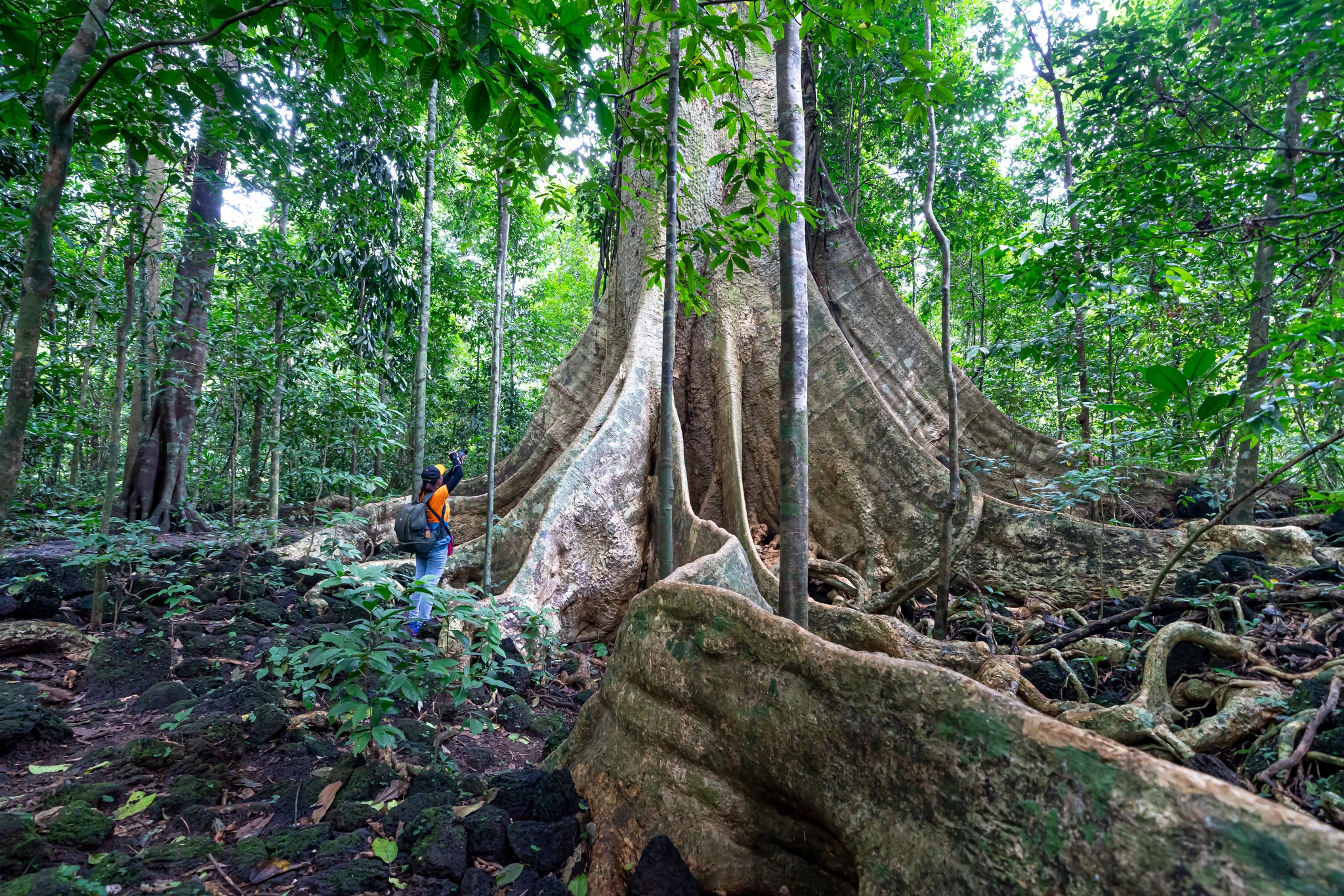
Tangkoko Batuangus Nature Reserve, on the north-eastern tip of Sulawesi, is the dependable place to see the Sulawesian spectral tarsier in the wild. The reserve lies about 60 km from Manado. Rangers know which strangler figs hold which tarsier families. They take small groups to those trees at dawn and at dusk. You cannot look for tarsiers without a ranger.
The animal
The Tangkoko tarsier weighs about 110 grams, less than a small bar of chocolate. It turns its head 180 degrees each way. Each of its eyes is bigger than its brain, and it uses them to see in the dark. From a crouch, it jumps forty times the length of its body.
The species is Tarsius tarsier, also known locally as Tarsius spectrum. Each family group has three to seven animals. By day a group sleeps in a hollow inside a strangler fig. The tree is almost always a fig, and almost always one with a mass of hanging roots thick enough to hide a small primate. The family leaves at dusk to hunt and comes back at dawn.
Why the rangers matter
Rangers find the tarsiers for you. One of them, Pak Yoyo, has followed the same groups since 2009 and knows every fig nest a short walk from the gate. Others do the same work. Seeing a tarsier here is not luck. The rangers run a system, and that system works because everyone keeps to the rules.
They map the trees. Some figs have held tarsiers without a break for fifteen or twenty years, while the animals inside change as they die or move away. If a family leaves its tree, rangers locate the new one within a few days. A newly settled family gets a number and a place on the watch rota.
So you do not wander in and hope. You walk to one known fig, at one set time, with a ranger who knows which family lives there.
They are organised. The BBKSDA Sulawesi Utara conservation office oversees the rangers. A community structure based in Batu Putih village works alongside it. At the gate, each visitor gets a community ranger for the whole visit. You cannot refuse this. Only groups led by a ranger may use the trails.
They rest the trees. Rangers may visit one fig two or three times in a week. After that they leave it alone for two weeks. Constant attention can drive a family out of its tree. Stress also lowers breeding success, and the local population is small. Conservation comes first here and tourism second.
Pay the ranger fee in full. At the time of writing, a dawn or dusk walk cost about €12 per group. Park entry was a separate €12 or so for each foreign visitor. These fees pay for the watch rota and the rest periods. Do not try to bargain them down.
Dusk or dawn
You can see tarsiers in two windows, and each shows you something different.
| Dusk | Dawn | |
|---|---|---|
| Time | About 16:30 to 18:00 | About 05:00 to 06:30 |
| What happens | The family leaves the fig to start hunting | The family comes back from the night and goes into the fig |
| Light | Fading but usable | Poor |
| Best for | The classic big-eyed photo; rangers can often place you four or five metres away | Watching the family settle, sometimes calling to each other |
Most visitors go only at dusk. If you can give up a morning, dawn is the better experience.
Season. The dry months, May to October, are best. From November to March you can still go, but the paths turn slippery and rain can cancel a walk. Tarsiers eat insects, and there are more insects on dry days, so the animals are a little more active.
Rules to follow
The gate signs cover the basics. Keep your hands off the animals, use no flash and keep to the path. The rangers also enforce rules that are not always written down.
- Never use flash. A tarsier's eyes are very sensitive to light. One flash can leave an animal unable to see, and unable to feed, for the rest of the night. A ranger will stop your walk if you use flash, and is right to.
- Keep your voice low. Ordinary talking sends a tarsier further into the leaves. Whisper or say nothing. If you forget, your ranger will remind you.
- Play no sounds. Some visitors play recorded tarsier calls to draw them nearer. Rangers treat this as a serious offence. Territorial calls are a stress reaction, and provoking them causes harm. It will also cost you your ranger.
- Stay at least four metres away. This is not always on a sign, but rangers enforce it.
- Spend fifteen minutes at most at each tree. Rangers control how long people stay. When they say move on, move on.
Visitors who respect these rules see the tarsiers. A visitor who pushes is taken back to the gate, together with the rest of the group.
More wildlife at Tangkoko
The reserve covers only about 8,800 hectares, but it holds more species than its size suggests.
- Sulawesi crested black macaque (Macaca nigra): endemic and critically endangered. Troops used to people live along the main path, and you will probably meet one.
- Sulawesi hornbill (Rhabdotorrhinus exarhatus) and knobbed hornbill (Rhyticeros cassidix): both pass through.
- Bear cuscus, smaller mammals and several endemic birds.
How long to stay. Two nights suit most visitors. That gives you time for a tarsier walk at dawn, another at dusk, and a daytime walk to see the macaques. Keen birders should stay three nights. One night is too short.
Getting there and staying
Tangkoko is on the east coast of the Minahasa peninsula. By car the trip from Manado takes about 90 minutes to two hours. By mikrolet (public minibus) and then ojek (motorbike taxi), allow about three hours.
You stay in Batu Putih village. It has about six homestays and two simple lodges. At the time of writing, a basic room with breakfast cost about €12 to €21 a night.
Hiring a driver from Manado is the easiest option. At the time of writing, a return trip with waiting time cost about €33 to €43. Ask your guesthouse in Manado to arrange the driver instead of bargaining at the airport.
Most people come here after diving at Bunaken. The two fit together well: dive first, then drive up the coast for the tarsiers. Add a spare day if possible. In recent seasons, heavy rain has stopped walks for two or three days in a row.