Tana Beru Boatyard: How Bugis Shipwrights Build a Pinisi Without Plans
Bugis shipwrights at Tana Beru, near Bira, build wooden pinisi schooners with no drawings and no tape measure. How it works and how to visit.
Budaya9 menit baca
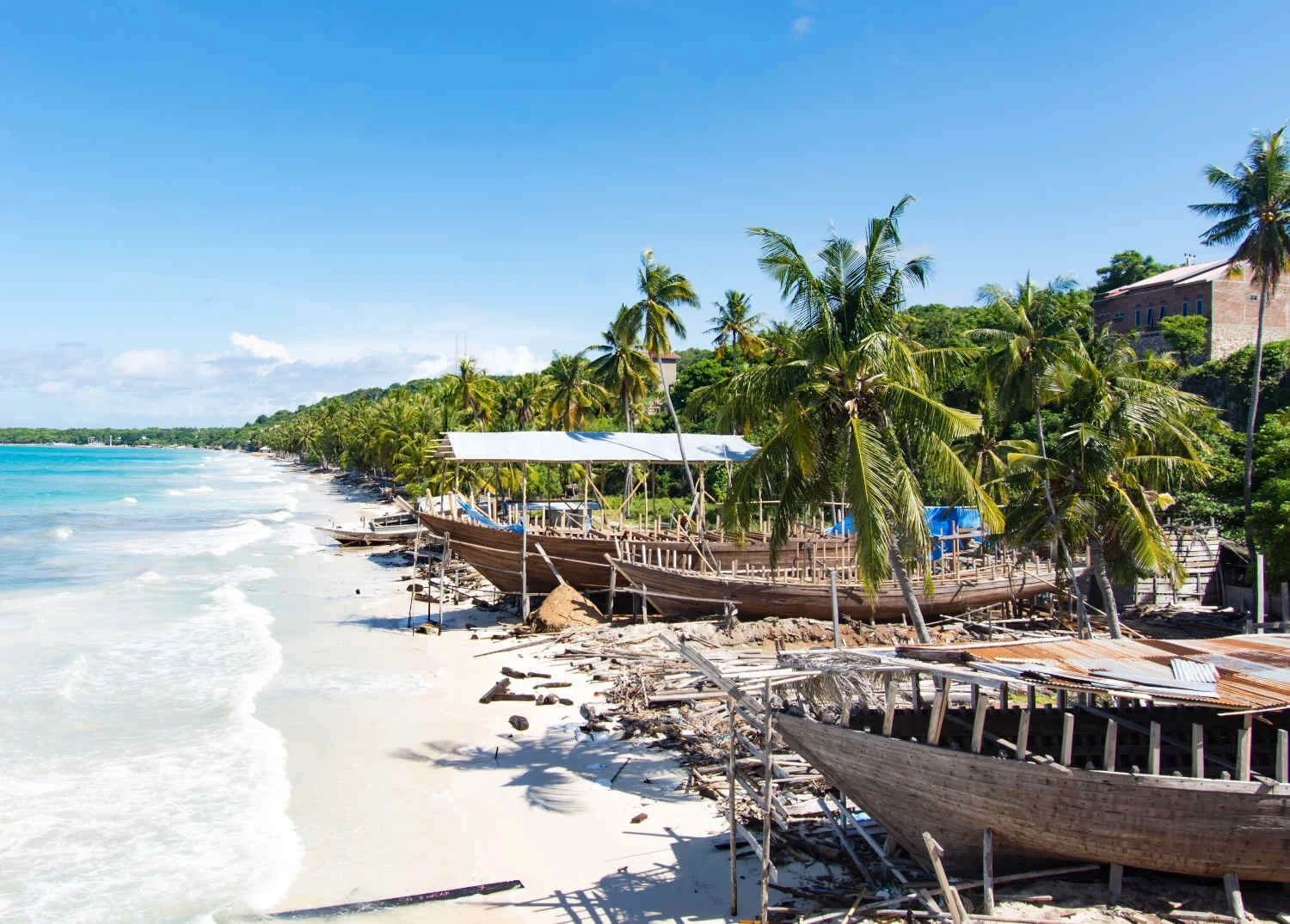
Tana Beru is a village 12 km from Bira, at the southern tip of South Sulawesi, where Bugis carpenters build pinisi, the wooden schooners of Indonesia. They work without drawings and without tape measures. A master builder holds the shape of the hull in his memory. Each plank takes its size from the plank before it, marked with a chalk line. In 2017 UNESCO added the pinisi shipbuilding tradition to its list of Intangible Cultural Heritage.
Villages along this coast have built pinisi for roughly five hundred years. Nobody can give an exact start date. The tradition already existed when the first European fleets sailed past. Pinisi carried Bugis and Makassar traders around the archipelago and further afield.
This guide explains how the builders work, the role of the master builder, what has changed and how to visit the yard.
First impressions of the Tana Beru yard
The smell reaches you before anything else. It comes from ulin, or ironwood, a heavy, oily timber. It is the only wood the Bugis trust for a hull meant to last forty years.
Next you notice what is absent. Nobody pins drawings to a wall. There are no tape measures, no jigs and no templates, none of the kit a Western boatbuilder would call essential. What you do see is a chalk line on the last plank fitted, and an older man holding a string with a weight tied to its end.
Keel first, planks next, ribs last
The order of work is the key difference, and it matters more than it first seems.
| Step | European tradition (frame-first) | Pinisi tradition (plank-first) |
|---|---|---|
| 1 | Lay the keel | Lay the keel |
| 2 | Build a skeleton of frames | Fix planks to the keel, edge to edge |
| 3 | Cover the frames with planks | Fit the ribs inside, to brace the hull |
In a pinisi the hull shell goes up first. The frame comes after.
Timber
- Keel and lower planks: ulin, also called Borneo ironwood (Eusideroxylon zwageri). Builders use it below the waterline, where the hull needs strength and must resist water.
- Upper planks: bayam and other lighter hardwoods.
Ulin no longer grows in Sulawesi in usable amounts. It arrives by boat from Kalimantan. Each year it costs more and faces tighter rules.
Time, crew and tools
- Time: 9 to 12 months for a hull of 30 metres.
- Crew: three or four full-time carpenters. The master builder controls the shape and settles any problem they cannot.
- Tools: hand tools only. The carpenters use adzes, saws and drills worked by hand, plus a few angle gauges. Nobody uses power tools on the keel or the planks. Power tools appear only at the end, for the finishing work.
The panrita lopi: master of the boat
Panrita lopi means "master of the boat". He is the man who carries the shape of the hull in his head. He fixes the size, judges the proportions and chooses the place of every plank.
He never draws the ship. He builds it from memory of every hull he has worked on. Over thirty or forty years, that can mean several hundred ships.
Visitors struggle most to believe this part. There really is no plan.
- Plank width: the carpenter holds the new plank against the last one and marks it with chalk.
- Rib curve: he lays a string over the rib, with a weight hanging from one end.
- Waterline: the master judges it by eye. The launch proves him right or wrong. If he has judged well, the ship floats at the line he picked, and it sits level.
In practice the title passes down through families, though no law requires this. Most working panrita lopi took over from a father or an uncle. Several yards in Tana Beru belong to men from large Bugis families who have built ships on this coast since colonial times.
Why the shipwrights use no tape measure
On a hull of this size, built this way, the master's eye is more accurate than a tape measure. A pinisi does not follow a specification on paper. It follows a proportion the builder holds in his mind. He adjusts that proportion as the timber shows its character. One plank twists more than expected. Another hides a flaw. The final hull is the sum of many small choices, made one plank at a time. A tape measure cannot follow those choices. A chalk line drawn from the last plank can.
Ritual matters too. Each build starts with a short ceremony when the keel goes down. The panrita lopi says blessings, and the owner provides food. Similar small rites mark several later stages. The work is both a craft and a religious practice. That, together with building without paper, is why UNESCO lists it as living heritage and not as a factory process.
What has changed at Tana Beru, and what has not
New
Most pinisi built at Tana Beru today will work as motor charter boats in the liveaboard dive trade around Komodo or Raja Ampat. Builders strengthen the ulin keel with steel. They fit generators and two diesel engines. On a new boat the sails are mostly for show.
Unchanged
- The keel goes down first.
- The planks go up before the frame.
- Nobody draws a plan.
- The panrita lopi still leads the work.
The yards have added modern needs without dropping the old method.
At risk
Nobody knows if the method will last another generation. Young Bugis men are not taking up the adze as their fathers did. Several yard owners have said in public that they struggle to find apprentices.
Who buys the boats now
A pinisi launched at Tana Beru in 2026 will most likely join the Indonesian liveaboard charter fleet. Its buyer will be an operator in Labuan Bajo, Sorong or Bali running weekly dive cruises through Komodo and the Coral Triangle. This trade has helped Tana Beru. Orders have stayed full for ten years, and the yards have grown.
Fewer boats go to traditional buyers:
- Bugis traders on routes across the Java Sea
- Fishing businesses in eastern Indonesia
- Now and then, a foreign collector
The cargo pinisi that once sailed between Makassar and Singapore has almost disappeared. Container ships replaced it in the 1980s.
For a visitor, this means the hull in front of you could appear in photos from your own Komodo cruise five years from now. Tourism brought back the demand, and that is why the craft survives. This kind of survival has costs of its own, but the craft is still alive.
How to visit the Tana Beru boatyard
Getting there
The paved road from Bira is 12 km long, about 20 minutes by car. At the time of writing a return ojek (motorbike taxi), with waiting time, cost €7.
There is no gate, no ticket and no official entrance. The yards line the coast road. Park where you like and walk in.
Guide or no guide
You can walk around on your own. A guide will show you much more. The carpenters are busy, and few of them speak much English. A guide explains each hull: its stage, what the carpenters are doing and why, and who the panrita lopi is. At the time of writing two hours with a guide cost about €12. Most guesthouses in Bira can book one.
Etiquette
- Keep out of the work area around any hull under construction.
- Watch your feet. Avoid the tools, and the chalk lines marked on deck planks.
- Ask before you photograph a worker's face.
- If someone shows you around informally, tip him. About €2.50 is right.
Best time of day
Go in the morning. The light suits photography, and the carpenters work hardest before the heat builds. By 14:00 most heavy work has stopped.